The Future of Work and AI
THE AI NARRATIVE
The narrative surrounding Artificial Intelligence has long oscillated between utopian dreams and dystopian fears.
For years, the prevailing anxiety has been that AI is a looming threat a force that, if left unchecked, could automate away our livelihoods and concentrate immense wealth into the hands of a few capital-rich entities.
However, as global policies, regulations, and frameworks rapidly evolve, a new reality is emerging. AI is not an adversary; it is a profound harness. It is an architectural framework through which we can redesign the future of work, transform shared business models, and ultimately, heal the divides that have long fractured our society.
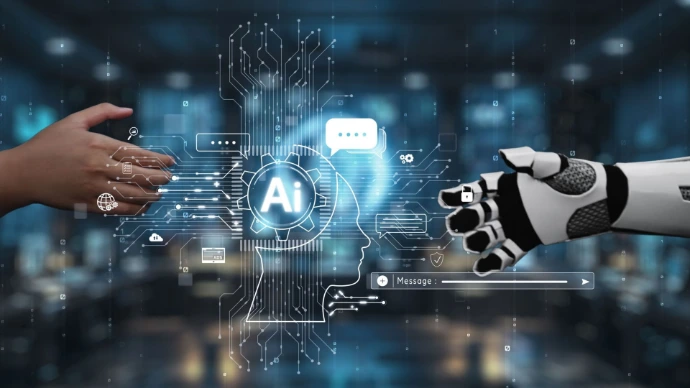
Human and AI collaboration. Source: Shinsei Motions / Getty Images
Governance as the Blueprint for Abundance
Given the rapid pace of development, major AI labs are increasingly proposing self-imposed guardrails.
The evolving landscape of AI governance—from the EU AI Act's risk-based tiers to the OECD AI Principles—is shifting its focus from mere restriction to responsible enablement. Smart regulations ensure that AI deployments remain transparent, ethical, and aligned with human rights. But more importantly, these frameworks are laying the groundwork for true democratization.
If AI were left entirely unregulated, there is a legitimate fear that the wealthy might monopolize fully automated businesses, entirely stripping human expertise from the equation. The antidote to this is not to halt technological progress, but to adapt our economic structures. The governance of tomorrow is about ensuring that the foundational digital infrastructure is accessible to all, from large corporations to grassroots startups.
Shared Business Evolution: Humans as the Ultimate Investment
In this new paradigm, human beings are no longer viewed merely as operational labor, but as the core of business investment.
To prevent a widened socio-economic gap, we must fundamentally change how businesses evolve. The future of enterprise management cannot be a zero-sum game. Instead, we are entering an era of shared business evolution.
As AI automates routine tasks from complex inventory valuation to intricate workflow approvals human energy is freed up for what we do best: strategic thinking, empathetic leadership, and collaborative innovation.

Focusing on human collaboration. Source: Noko LTD / Getty Images
We must structure our investments so that people are integral stakeholders. By treating digital transformation as an opportunity for youth empowerment and community incubation, we build resilient enterprise ecosystems. Human collaboration ceases to be just a corporate buzzword; it becomes the fundamental requirement for living and thriving.
Removing the Bottlenecks to Collaboration
To prevent a widened socio-economic gap, we must fundamentally change how businesses evolve. The future of enterprise management cannot be a zero-sum game.
Historically, access to powerful operational tools was a bottleneck that separated the rich from the poor. Today, AI technology seeks to shatter those divides. By integrating intelligent systems into the fabric of everyday commerce, we empower small enterprises and local visionaries to compete on a global stage.
When we democratize access to advanced system architecture, we create an environment of abundance. AI removes the friction of geographical and economic barriers, allowing humanity to collaborate as one unified force. The wealth generated by these efficiencies doesn't have to pool at the top; it can be decentralized, creating sustainable wealth generation across communities.
Harnessing Science for a Healed Planet
By leveraging intelligent innovations to reduce industrial pollution, accelerate medical breakthroughs, and foster sustainable environmental ecosystems, we can build a future where both humanity and the earth thrive in true harmony.
Beyond the boardroom, harnessing this technology unlocks unprecedented scientific discovery, directly elevating our global standard of living.

AI optimizing sustainable infrastructure. Source: Nopphinan / Getty Images
Revolutionizing Healthcare: AI is accelerating the discovery of life-saving drugs and personalizing medical treatments. By predicting disease outbreaks and automating medical diagnostics, AI bridges the healthcare gap, bringing world-class medical insights to remote and underserved populations.
The Path Forward
As we navigate the rapid advancements in AI technology, we are presented with a pivotal opportunity to transform our society.
The evolution of AI technology is an invitation to upgrade our society. It challenges us to build systems both software and societal that prioritize equity, sustainability, and human connection.
This evolution invites us to create systems both technological and societal that emphasize equity, sustainability, and human connection. By embracing these principles, we can ensure a future where AI serves as a tool for collective progress and shared prosperity.